


By Sameen Mohsin
In a lot of ways, looking at the sky can be a very grounding experience, especially if you look a little deeper and truly think about what you’re seeing. That was what I kept thinking after my conversation with Roshaan Bukhari, President of the Lahore Astronomical Society (LAST). He puts it best when he introduces the society and its work: “We think that if there is a playground for curiosity, there is no bigger playground than the universe. And it’s free. All you have to do is look up.”
Roshaan’s fascination with astronomy began in fourth grade. Ever since, he has spent years of his time and energy reading about the sky, stars and planets, and letting his curiosity, and telescope, unveil the various mysteries of the universe. But after a while, he found himself wanting to share this enthusiasm with someone, have face-to-face conversations, and exchange knowledge and thoughts. “In my early twenties, I was so filled with this passion of astronomy, but I couldn’t figure out an outlet for it, I didn’t know where to go and who to talk to.”

It was then that Roshaan began writing to astronomy experts and podcast hosts he used to follow, asking them if they knew of a society where he could talk to other people and find a community. Fraser Cain, publisher of Universe Today and co-host of Astronomy Cast, wrote back and told him about the society right here in his own city, the Lahore Astronomical Society (LAST), which was led by Umair Asim at the time. He immediately looked them up on Facebook, got in touch and attended their next monthly meeting. After that, there was no looking back.
LAST was founded in 1994 by two Astronomy enthusiasts, Omer Aziz, an Electrical Engineer and Automation Expert, and Dr. Nasir Raza Awan, a Neurosurgeon and CEO of SpinaCure. Thirty years later, the society has around 31,000 members. Every month, the society organises a free meeting, open to everyone, where people interested in the stars, the sky and the universe can meet each other, discuss various topics and troubleshoot any issues they’re having with their own stargazing equipment.
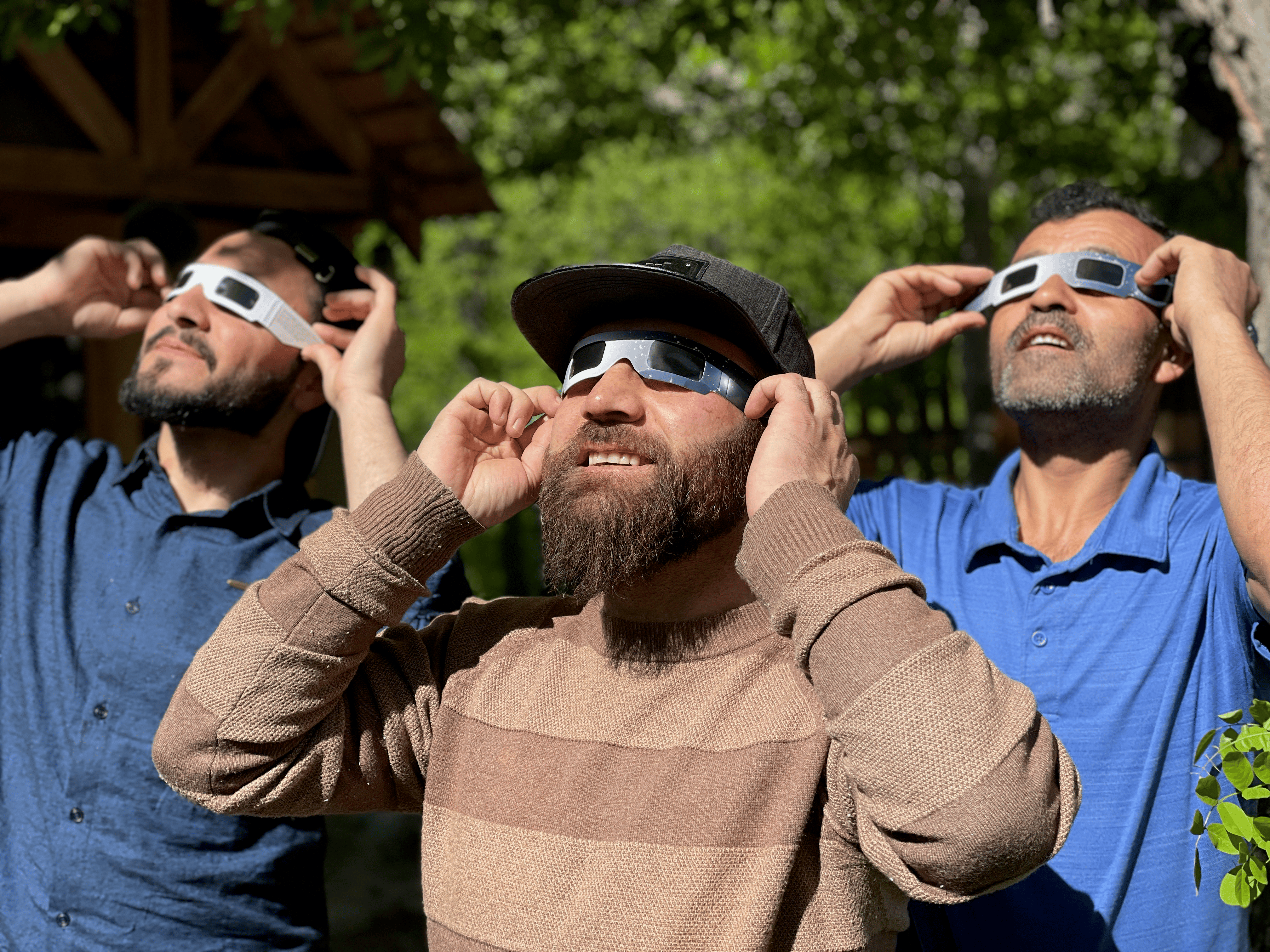
In the early days of the society, meetings happened in drawing rooms or office boardrooms during lunch hour, but now take place in larger spaces, attracting people from all backgrounds and professions, ranging in age from 6 to 65. What they share is their love for astronomy, their need for a little escape and a community.
Roshaan explains why these meetings are important: “We really believe meeting people in person is important. If you don’t meet people, don’t talk to them, you miss out on a lot of learnings and moments of connections. I can’t hold the galaxy in my hand, or the stars for that matter, so I need to talk to people about it and have deeper conversations.”

Another important mission for LAST is to create more awareness about the wonders of the universe in broader society. For this purpose, it also conducts telescope outreach in schools and public places like parks and festivals. Kids and adults alike are invited to look through the LAST telescope and are guided through the activity by members, who are more than happy to answer any questions participants might have about what they are seeing.

What’s interesting is that parents usually bring their children to these viewings, but LAST members encourage the parents to look through the telescope too. Sometimes, the same adults suddenly have a sparkle in their eye. They’ll recall a night sky from their childhood and animatedly discuss their own thoughts and experiences. According to Roshaan, it is when they see someone go a little quiet, lost in thought, as they slowly move away from the telescope…that’s when they know they’ve done their job.
“When we set the telescope in public, show them the moon or Saturn, it’s really small, not that remarkable, but even then, when kids, adults and elders see the planet live, the reactions, the awe, they almost can’t believe it. Adults thinking about what they’ve seen for a while longer, a child getting curious enough to Google something at home, that’s what we aspire for.”

The LAST Facebook group has also evolved into a thriving hub for astrophotography. On a daily basis, dozens of original astrophotographs come from all over Pakistan – Sindh, Attock, Jhelum, Abbottabad, Lahore, Multan, Quetta and beyond. There are so many entries that the group started an Image of the Week competition. Every Sunday around 3PM, a picture is featured as the Image of the Week, and the photographer is given due credit. Currently, the society is considering submitting the collection of photographs to a publication or turning it into a book.
Over the past ten years, astronomy groups and societies have emerged in several cities across Pakistan, with more established societies taking root in Karachi, Lahore and Islamabad. Karachi Astronomy Society has its own observatory and often does public tours. However, dark-sky regions such as Murree, Skardu and Gilgit are yet to have an astronomical society of their own, but LAST is aiming to change that.

“Out of our own pocket, we are actually planning to give the community in Skardu a telescope within the next year. They really need an astronomical society so their own community is able to see their beautiful sky up close,” Roshaan states.
This is an exciting and recurring theme throughout our conversation: the expansion of the scope of the society in a way that deepens its impact and makes LAST more sustainable. Already, they are a resource that Lahore-based media channels often reach out to in times of astronomical events.
LAST has also worked with a few universities to help them set up their own science centres and telescopes, an initiative they hope to expand.
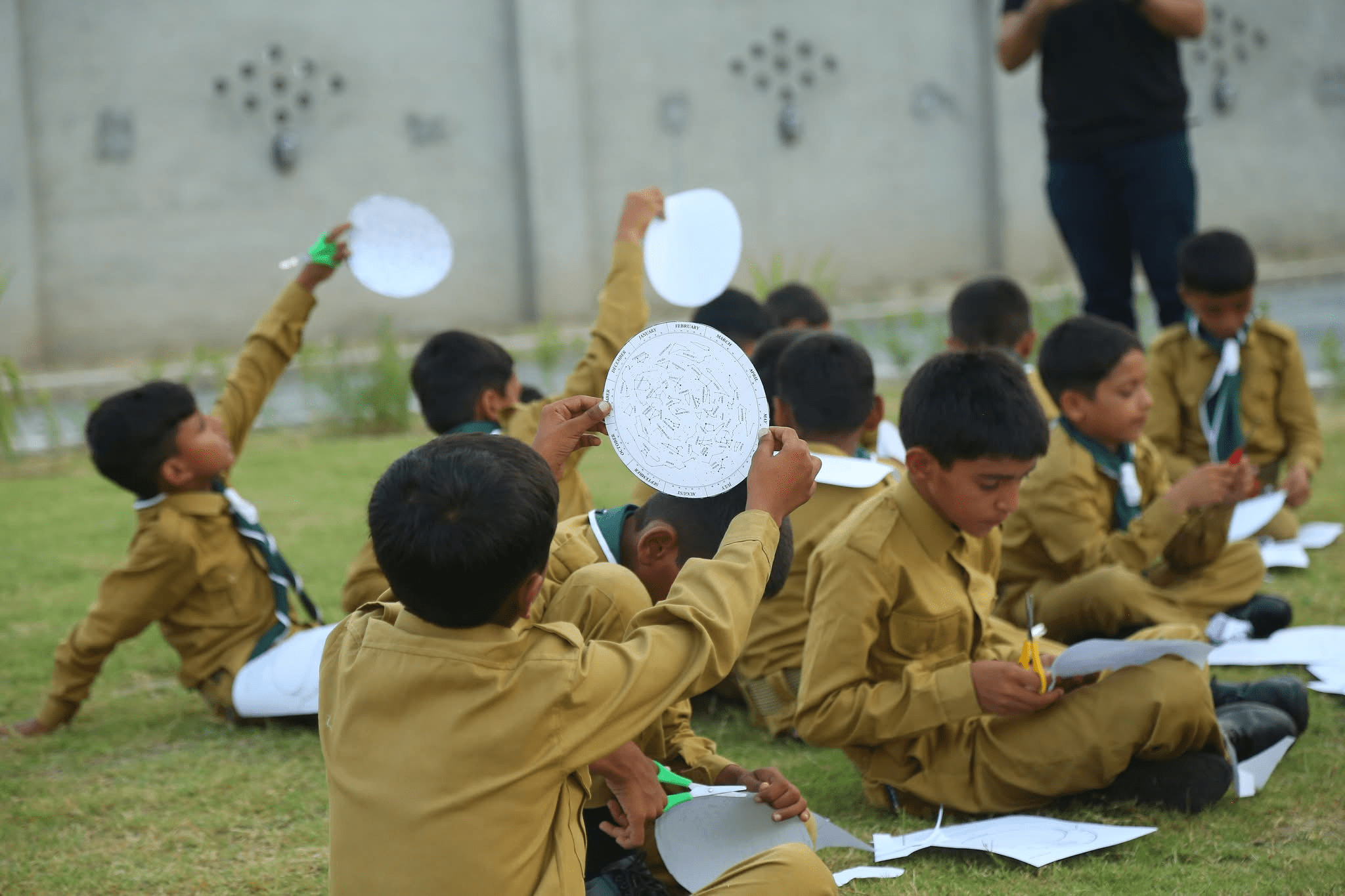
“If universities get telescopes, LAST can train their staff to operate them, troubleshoot the equipment and also provide educational training, like workshops on astronomy or astrophysics or a visit to dark-sky locations.”
However, it is important for Roshaan and the society that they continue reaching beyond private universities and schools and create connections with government schools and departments. They want to be able to do free outreach for children in government schools and continue placing telescopes in parks and public spaces. For this, they are looking to have conversations at the district government level so these initiatives can be executed efficiently.
Currently, one of the most ambitious ideas LAST is working on is its Celestial Fund, an idea Roshaan says came about because they “wanted to prevent the wilting of good ideas through bad funding.”
The fund is being set up by a few people in the society who are going to put some money in a digital jar, which can only be used when someone has a brilliant idea to expand the mission of the society. For example, someone might want to do street astronomy sessions in different cities in Punjab, or engage a celebrity in a podcast or a LAST activity. They can come to the society for the resources and funds they need, and they will be supported.
Roshaan is excited about the potential of the society to build a bridge between the universe and the people of Lahore. If you have ever looked up at the sky and found yourself filled with questions, Roshaan says just show up to the LAST monthly meeting and they’ll help open up the entire universe to you, metaphorically and maybe even literally.

He reiterates that the society’s aim isn’t to make everyone an astronomer. Rather, they hope to plant a seed of curiosity and learning in people – one that, he believes, can take them quite far.
“No matter what you do in life, you can’t entirely rid yourself of curiosity…so why not make the universe a conduit to finding your own passion?”
Header image: Captured by the James Webb Space Telescope/NASA, HH 49/50 – nicknamed the “cosmic tornado”- shows a spectacular outflow of gas and dust from a newly forming star, creating shock waves as it collides with denser material. The galaxy appearing to sit atop the pillar is actually light-years away, creating a striking illusion in this Webb image.
The author is a writer and communications specialist with a deep interest in art, culture, and the people who shape a city. She is endlessly curious about the stories that make up Lahore’s character and documents her life, observations, and favourite corners of the city on Instagram.