


By Iqra Nayab
What happens when two people accustomed to the speed of modern professional life decide to build a place where almost nothing is urgent? In Shishkat, a village along the Hunza River, Fahim Ahmad and his wife, Mariam Ibraaz, have spent the past few years creating an answer in earth, stone, timber and silence. They call it The Simurgh, after the mythical bird in Farid-ud-Din Attar’s The Conference of the Birds, the Sufi allegory in which a flock travels across seven valleys in search of a creature that turns out to be a reflection of themselves.
The idea sounds almost impossibly philosophical for a hospitality project. Yet, spend time looking at The Simurgh and the connection begins to make sense. The architecture is deliberately rooted in the landscape, the rooms are intimate and tactile, and the pace is noticeably different from the one most visitors have left behind. There is little here competing for attention, the mountains do most of that work themselves.

For Fahim, the journey towards this place began somewhere considerably less tranquil: in advertising, where he spent more than two decades working with agencies including Ogilvy & Mather and Orient McCann Erickson (among others) and with global brands including Coca-Cola, British American Tobacco, Nestlé and Telenor.
The Simurgh, in other words, represents quite a departure from the world he once inhabited. Advertising is an industry built around attention, persuasion, desire and speed. It asks people to look, want, choose and buy. The Simurgh asks something rather different of its guests: to slow down, to notice, and perhaps to want a little less.

Fahim does not describe the transition as a dramatic rejection of his former life. Instead, the idea emerged during a period when the entire world was forced to slow down.
“It was during the lockdown in 2020 when everyone’s lives became slowed down that we realised how much we were enjoying the pace of things and working from home,” he says. Fahim and Mariam were staying in Hunza for several months at the time, without the usual demands of their professional lives.
“It was perhaps the first time in years that we were able to slow down from the demanding routines of our jobs. We realised it was what people, including ourselves, needed…a peaceful sanctuary in nature that could help you relax and reflect.”
The idea for The Simurgh grew from that realisation, but its name and philosophy came from somewhere much older.
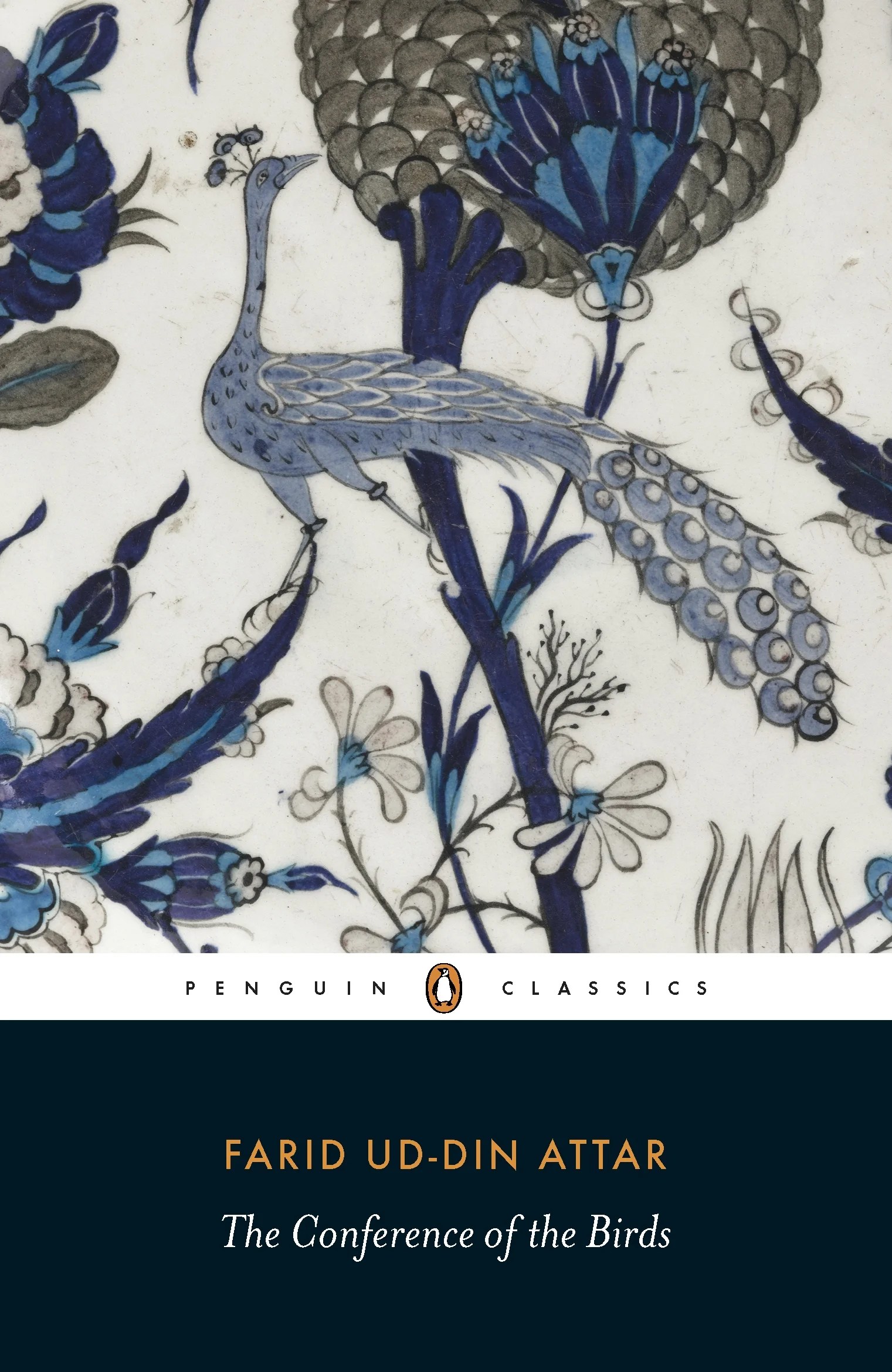
Mariam had been reading Attar’s The Conference of the Birds while working on a painting inspired by the Simurgh. In the poem, a flock of birds sets out on a difficult journey across seven valleys in search of the mythical Simurgh. The journey becomes one of hardship, self-discovery and transformation. When they finally arrive, they discover that what they have been searching for has been within them all along. Mariam suggested the name to Fahim, and something clicked.
“What deeply resonated with us was the philosophy of oneness within the story,” Fahim says. “The idea that humanity, nature, and creation are all interconnected is so profound and meaningful.”
That idea became the foundation for The Simurgh, which was conceived not simply as a place to stay, but as a sanctuary built around stillness, reflection and reconnection, with oneself, nature and the landscape. It is a philosophy that extends into the physical structure itself.

In a region where concrete construction is increasingly associated with development and progress, Fahim chose to look towards the building traditions that had evolved in Gilgit-Baltistan long before contemporary notions of luxury arrived. The Simurgh uses rammed earth, stone, adobe blocks and locally sourced wood, drawing on techniques shaped by the region’s geography.
“Aesthetics were important, but for us the architecture was always about something deeper, preserving the building traditions and cultural identity of Gilgit-Baltistan,” Fahim explains. “The region’s vernacular architecture evolved in direct response to its landscape, climate, and way of life, and we felt there was profound wisdom in that.”

The result is a contemporary interpretation of vernacular architecture rather than a replica of it. The rammed-earth walls are layered in a way that echoes the geological strata of the mountains surrounding the property. Stone excavated from the site was shaped by hand, while clay and timber from the region give the interiors a warmth that feels markedly different from the polished uniformity of much contemporary hospitality design.
“At a time when many local building techniques are disappearing, we wanted The Simurgh to become a contemporary revival of those methods through rammed earth, stone, adobe blocks and wood,” Fahim says. “It was our way of honouring the region’s craftsmanship, history, and relationship with nature.”

The project has also opened new doors for Fahim professionally. Since creating The Simurgh, he says, he has received opportunities to work on projects embracing climate-sensitive design, traditional techniques and vernacular architecture. For him, the growing interest in such spaces is encouraging because it suggests that modernity and tradition do not necessarily have to exist in opposition. The relationship between landscape and design is something Fahim has been exploring for years, long before The Simurgh took physical form.
Alongside his advertising career, he spent years photographing Sufi traditions, remote communities and landscapes across Pakistan, travelling through places such as Deosai, Kalash, Cholistan, Chitral and Hunza. Those journeys shaped his understanding of spirituality as something less concerned with abstraction and more deeply connected to presence, humility and place.
Those experiences also influenced the way he approaches space. “Some of the most profound spaces are often the places shaped by silence, light, material, and nature. The Simurgh was designed from that sensibility. Every space is intended to feel grounding and contemplative.”

You can see that sensibility in the details. The rooms are built around natural materials and light, with spacious bathrooms and private outdoor thermal baths filled with natural spring water. Set beneath the open sky, the baths are designed for long, quiet stretches of time, perhaps for soaking, perhaps for stargazing, perhaps simply for doing nothing at all.
The architecture does not try to compete with Hunza’s spectacular landscape. Instead, it frames it. That distinction is particularly noticeable in the way The Simurgh presents itself. Scroll through its Instagram feed and there are surprisingly few people. Instead, there is light falling across earth walls, timber, stone, mountain views, an empty chair facing the landscape, a bed beneath soft linen, and spaces that appear to be waiting rather than performing.

Even the language surrounding the property is noticeably gentle. One caption reads, “May you know the softness that comes from being well-loved.” There is little of the frantic “book now” language that dominates luxury hospitality marketing. The Simurgh seems less interested in selling an escape than in creating an atmosphere. That is perhaps why it feels closer to a retreat from the pace of contemporary life than a conventional hotel.
Its retreats reflect the same philosophy. A ten-day programme titled ‘A Deeper Inquiry,’ for example, suggests an experience that goes beyond sightseeing. The premise is not necessarily to fill every hour with activities, but to create enough space for guests to encounter their own thoughts. And this, ultimately, brings The Simurgh back to Attar’s birds. For Fahim, the story is not simply an interesting literary reference or a beautiful name for a property. It has become a way of thinking about the journeys people undertake, and the possibility that those journeys may change them in ways they do not immediately recognise.

“The story of The Simurgh in The Conference of the Birds reminds us that what we are searching for already resides within us; it is not separate from our own being,” he says. “Every individual is on their own journey and our experiences can enrich who we are.”
So what does he hope guests actually take away from their time there? “We hope that spending time at The Simurgh, people take back with them some part of this humble space in Hunza, whether their awareness of this experience is subtle or strong, immediate or a gradual unfolding once they return home.”

It is an interesting idea for a hospitality space: that its success might not be measured by how spectacularly it entertains its guests, but by what quietly stays with them after they leave. Perhaps that is also where The Simurgh’s name becomes more than a metaphor. In Attar’s poem, the birds cross seven valleys searching for something they believe exists somewhere beyond themselves. The journey changes them, and when they finally arrive, they discover that the Simurgh they have been seeking is reflected back at them.
There in the Simurgh’s radiant face they saw
Themselves, the Simurgh of the world—with awe
They gazed, and dared at last to comprehend
They were the Simurgh and the journey’s end.
– The Conference of the Birds, Farid-ud-Din Attar
The Simurgh in Hunza cannot, of course, recreate that revelation for anyone. What it can do is create the conditions for a quieter kind of looking. A guest may arrive for the mountains, the architecture or the promise of rest, but the deeper experience may only become apparent later, once the noise of ordinary life returns.
For Mariam and Fahim, perhaps that is the real purpose of the place they have built together. Their work brings together art, design, photography, architecture, nature and an old Sufi idea about the relationship between the self and the world around it. The result is not an attempt to escape modern life altogether, but to create a temporary distance from it.
The author is an undergraduate student of English Literature at Kinnaird College for Women. Her interests include Pakistani literature, cultural history, and heritage studies, with a particular focus on the relationship between literature, memory, and place. Get in touch with her at: iqranyab09@gmail.com